
Find the Source Before Making the Repair
A plumbing leak does not always show up where the pipe has actually failed. Water can travel beneath flooring, behind walls, through ceilings, or underground before you ever see the first sign of a problem.
Our plumbers use inspection, testing, camera equipment, electronic locating, and other diagnostic methods to narrow down the source. Once we understand what is happening, we explain the findings and recommend the most practical repair for the condition of the piping.
Accurate Diagnosis
We use professional diagnostic methods to locate hidden plumbing leaks without unnecessary damage to your home.
Lasting Pipe Repairs
From isolated leaks to damaged water lines, we repair the source of the problem—not just the visible symptoms.
Protect Your Property
Finding leaks early helps prevent water damage, mold growth, high utility bills, and more expensive repairs.
Findings Explained
We walk you through what we discovered and provide straightforward repair options based on the condition of your piping.
Leaks We Diagnose & Repair
Leaks can develop in several parts of a home’s plumbing system. Where the leak is located determines how we test for it and what repair options are available.

Leaks beneath concrete foundations that may cause warm flooring, moisture, running-water sounds, or unexplained water use.

Leaks behind walls or above ceilings that may cause staining, dampness, bubbling paint, or visible water damage.

Leaks in buried water service piping between the meter and home that may cause pressure loss or excess water use.

Leaks around toilets, faucets, valves, appliances, and accessible supply connections that may worsen if left unaddressed.

Buried piping failures that may require locating, testing, and targeted excavation to confirm the affected area.

Repeated leaks may point to aging piping, corrosion, pressure problems, or a larger condition worth evaluating.
Signs You May Have a Leak
One sign alone does not confirm a hidden leak, but unexplained water use or moisture is worth investigating before the damage spreads.
Higher Water Bills
An unexplained increase in water use may be a sign that water is escaping somewhere in the plumbing system.
Meter Movement
If the water meter continues moving while fixtures and appliances are off, there may be an active leak.
Damp Spots
Moisture on floors, walls, or ceilings can indicate hidden piping leaks behind finished surfaces.
Running Water Sounds
Hearing water when no fixtures are in use may point to a leak somewhere in the system.
Low Water Pressure
A sudden or unexplained pressure drop can sometimes be caused by a leak or damaged water line.
Warm Flooring
Warm spots on flooring may indicate a leaking hot-water line beneath the slab or nearby piping.

Find the Problem Before We Dig
When a leak, break, or separation is buried underground, the goal is to understand the condition before opening up the property. We use sewer cameras and electronic line-locating equipment to inspect the inside of accessible piping, trace the route of the line, and narrow down where damage or separation may be located.
That information helps us make a more accurate repair plan, reduce unnecessary excavation, and explain what we found before moving forward. Depending on the type of leak, we may also use pressure testing, meter testing, moisture detection, or other diagnostic methods.

Not Sure If You Have a Leak? Check the Meter
-
Turn off faucets, irrigation, appliances, and anything else using water.
-
Check your water meter (usually located near street)
-
Wait several minutes without using any water.
-
Check the meter again.
If the meter continues to register flow when everything is off, there may be a leak somewhere on the property.
Then:
This test can indicate water loss, but it does not identify where the leak is located. A plumber still needs to diagnose the source.
What Happens When You Schedule Leak Detection?
You do not need to know exactly where the leak is before calling. Tell us what you are seeing, and our plumber will determine the next diagnostic step based on the symptoms and piping involved.
1. Tell Us What You’re Seeing
High water bills, damp flooring, low pressure, running-water sounds, or visible moisture? Share what changed and when you first noticed it.
2. We Inspect & Test the System
Our plumber reviews the symptoms, checks the plumbing, and selects the appropriate testing method based on the location and conditions.
3. We Narrow Down the Source
When conditions allow, we identify the likely affected area and explain what the diagnostic and testing tells us about the piping.
4. We Explain the Repair Options
We review what we found, what access may be required, and whether the problem appears isolated or part of a larger issue.
From Detection to Repair
Finding the leak is only the first step. Once the source is identified, the repair depends on where the failure occurred, the pipe material, access, and the condition of the surrounding piping.
Sometimes the right solution is a localized repair. In other cases, repeated failures, widespread corrosion, or aging piping may make a larger replacement or reroute more practical.
-
Localized pipe repair
-
Main water-line repair
-
Fitting replacement
-
Valve replacement
-
Underground excavation
-
Pipe rerouting
-
Section replacement
-
Repiping when appropriate
We recommend the repair that matches the condition of the piping, not simply the largest scope available.

Targeted Repairs Start With Good Information
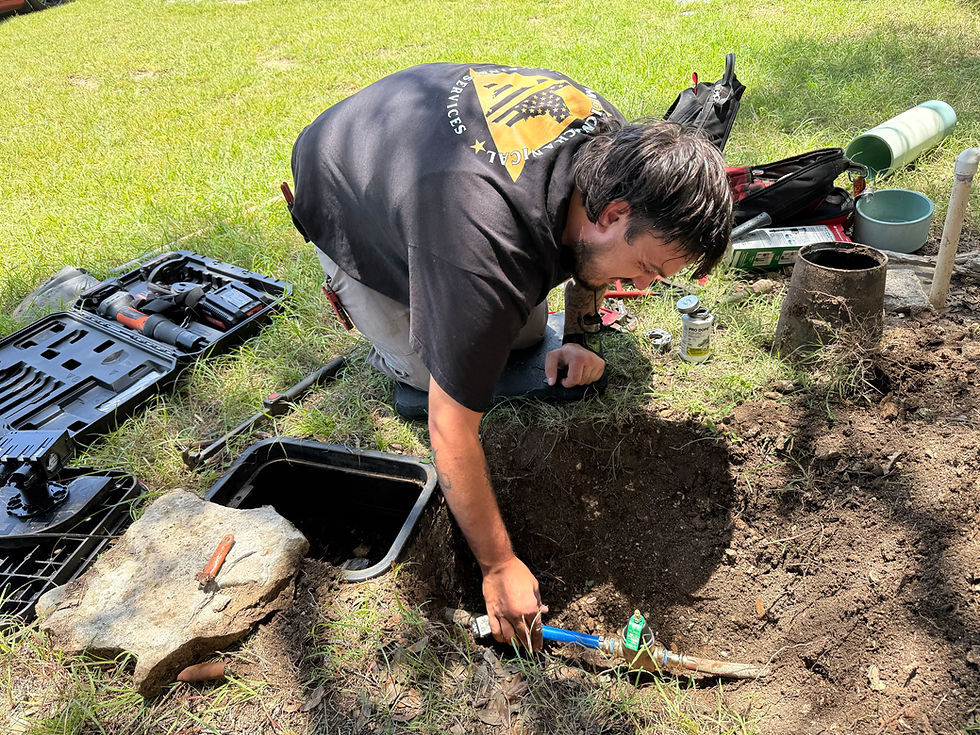
After locating the affected piping, we expose only the area needed to complete the repair whenever site conditions allow. This helps reduce unnecessary excavation and gives the homeowner a clear view of what failed and how it was corrected.

A Plumber Who Explains What They Find
Hidden leaks are stressful because the problem is often out of sight. Our job is to make the process easier to understand. We show you what we can, explain what the testing indicates, and walk through the repair options before work moves forward.
Related Services
Repiping & Water Lines
For aging piping, repeated failures, water-line replacement, and larger system upgrades.

Water Heaters
Repair, maintenance, and replacement for tank and tankless water-heating systems.

Drain & Sewer
Drain cleaning, camera inspection, hydro jetting, and sewer-line repair.

Emergency Plumbing
Responsive service for active leaks, water loss, and other urgent plumbing problems.
Leak Detection & Pipe Repair FAQs
How do I know if I have a hidden leak?
Unexpected water use, meter movement, moisture, low pressure, or running-water sounds can all be signs worth investigating.
Can you find a leak without opening walls or floors?
Often we can narrow down the affected area using testing and locating methods before opening finished surfaces, although some access may still be required.
Does a high water bill always mean I have a leak?
No. Irrigation, running toilets, increased household use, and other factors can raise water consumption, so the system needs to be evaluated.
What is a slab leak?
A slab leak is a leak in water piping located beneath or within the concrete foundation of a home.
Can you repair the leak after locating it?
Yes. In many cases we can provide the repair once the source and access requirements are understood.
How long does leak detection take?
Timing depends on the symptoms, piping layout, accessibility, and diagnostic method required. Some issues are straightforward while others require more testing.